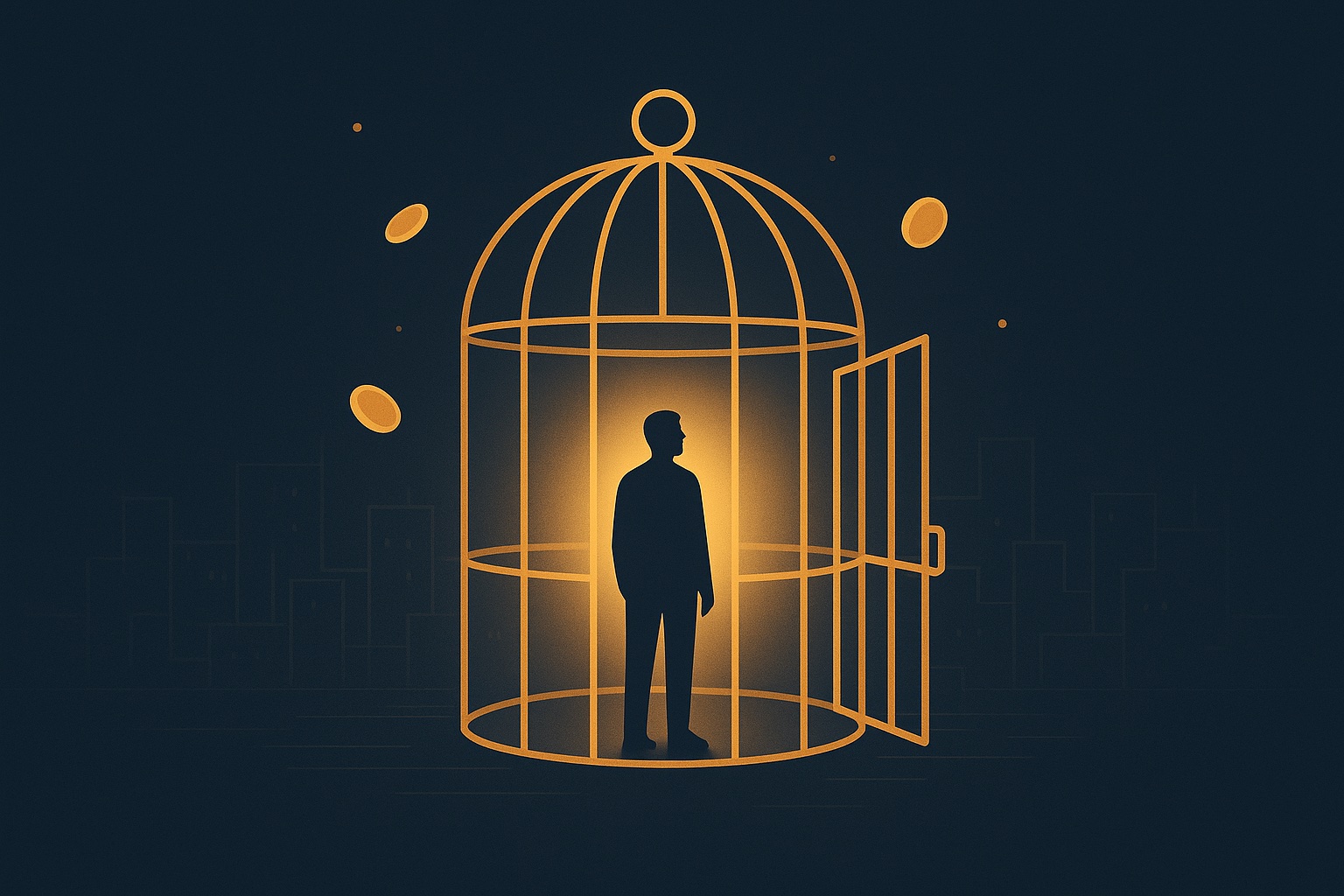
TL;DR: What truly traps people is often not external coercion, but a reward mechanism laced with uncertainty; it makes people believe they are choosing, when in fact they are simply handing themselves over to the system, again and again. The Skinner box, Marx’s alienation, and Heidegger’s enframing are all describing the same thing. From the rider running orders in the small hours to me, smugly watching my usage, we are in the same box; the most dangerous thing is to be so busy that you can no longer feel you are losing your freedom.
At one in the morning, I ordered a Meituan delivery.
At first I only wanted to experience for myself just how convenient this system really was. After asking the front-desk attendant how to place an order, a few taps later: skewers, flatbread, and two bottles of the day’s freshly brewed beer. It all arrived within 30 minutes.
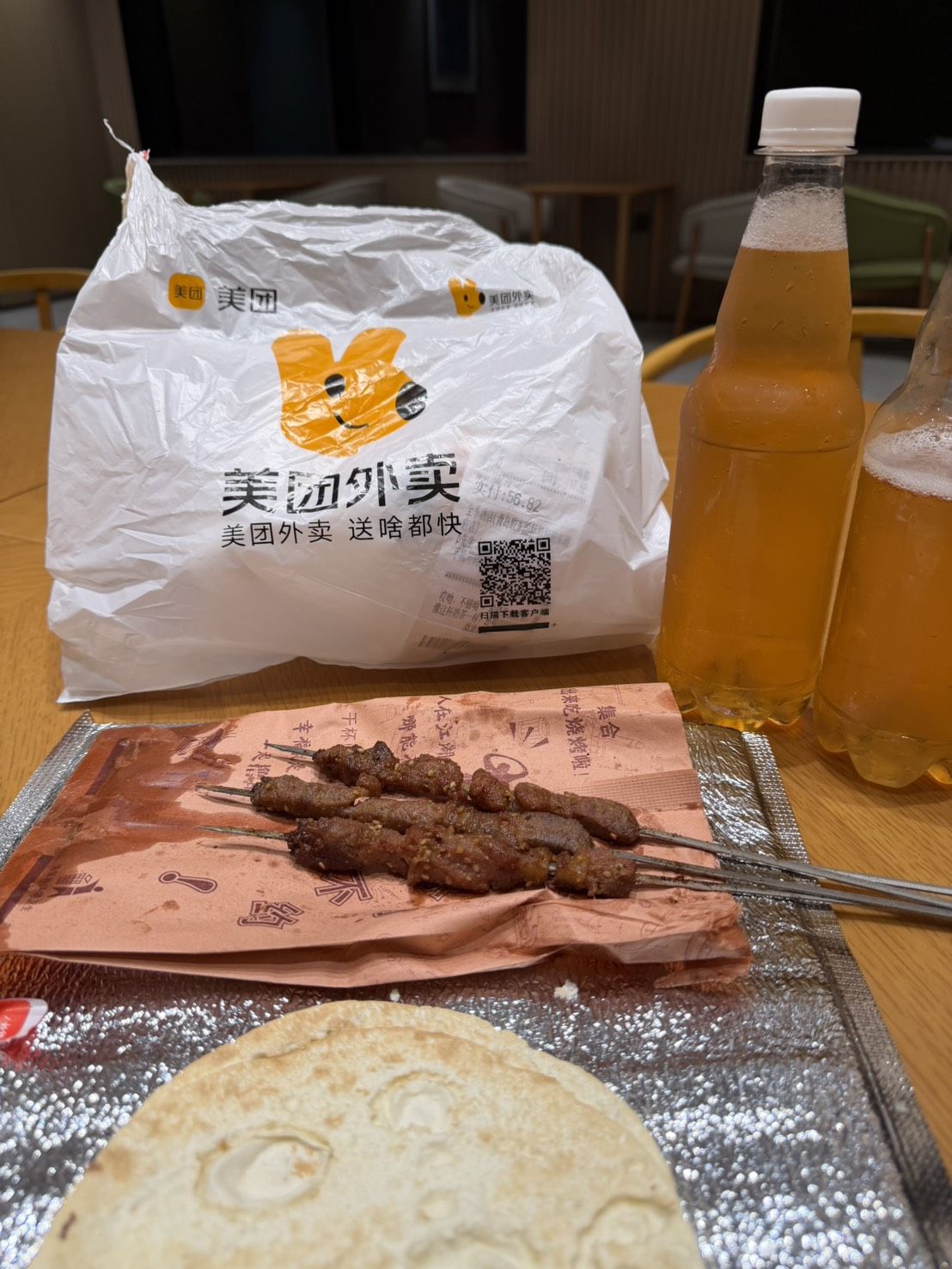
It’s just the scene you see, very ordinary. So ordinary that it reminded me of an investigative report that sparked nationwide debate in 2020: Delivery Riders, Trapped in the System (archived backup).
To be “trapped in the system” does not necessarily mean someone is holding a gun to your head. The deeper trap is when the system designs a set of rewards that make you believe every step is your own choice. And so the person doesn’t feel dragged along; he runs into that rhythm of his own accord, step by step.
Why Is It “Voluntary” That Traps You?
Run one more order, and the income goes up a little.
Be a little faster, and the rating holds steadier.
Accumulate to a certain threshold, and it seems just a little more worthwhile.
Every delivery rider has his own “upgrade quest.” It’s just that the outcome of this kind of upgrade is not necessarily becoming a freer person, but becoming a node that is more efficient, more predictable, and more easily dispatched by the system.

A still from the Solo Leveling anime, ©Solo Leveling Animation Partners/Aniplex, cited from the Gamania blog. The more beautiful the upgrade gauge, the more deeply the person is embedded in that frame.
The upgrade gauge is always just one notch short. You always feel that one more order, a little faster, holding on just a little longer, and the numbers will look better, your position will be safer, and tomorrow you might just feel a little more in control.
Having said all this, I am not placing myself outside the system. In a certain sense, I too am an individual upgrading by means of AI, likewise chasing that progress bar that forever hopes for a little more progress. The only difference may be this: the frame I’m in has a door that looks open; but if I am never willing to walk out, then that open door may not truly lead to freedom either.
The Skinner Box: Why Can’t People Stop?
This mechanism has a classic metaphor in behavioral psychology: the Skinner box1.
The key is not “whether there is a reward,” but the way it appears: the reward is irregular, laced with uncertainty. You don’t know whether the next order will be better, nor whether holding on just a little longer might happen to trigger some payoff. And so stopping becomes the hardest action of all.
This is much like gambling. What truly makes people addicted is that “maybe the next one hits” uncertainty: you never know whether the next time will pay off, so the hand keeps reaching for the next. Behavioral psychology long ago discovered that this kind of “variable ratio” reinforcement is the most habit-forming of all reward patterns, stickier than fixed rewards, because you are forever waiting for the next time.
A truly sophisticated system doesn’t force obedience. It makes people surrender themselves of their own accord, full of anticipation, full of hope, even a sense of achievement.
Marx: Why Does Labor Turn Around and Trap the Laborer?
The Skinner box explains “how to keep you from stopping.” As for “what a person becomes once he can’t stop,” Marx, in fact, wrote about it more than a hundred years ago.
What I ate was merely a late-night snack; but the person who delivered it may have been pushed through the city in the small hours by time, ratings, routes, dispatch, and reward mechanisms, even, at certain moments, having to trade risk for efficiency. And this is not the story of a few. In China alone, the population of online gig workers has already exceeded two hundred million person-times; from delivery workers and couriers to ride-hailing drivers, algorithms slice labor ever finer and bind people ever tighter. Taiwan is no different, and you and I have all seen the traffic accidents involving delivery workers on the roads.
In Economic and Philosophic Manuscripts of 1844, Marx discusses “alienated labor,” and one line reads just as poignantly today:
The more the worker expends himself in his labor, the more powerful becomes the alien, objective world that he creates over against himself, the more impoverished he himself (his inner world) becomes, the less belongs to him as his own.
Every additional order a rider runs feeds more data, more routes, more predictability into the very system that pushes him to run; the system thus grows stronger, while he himself may be bound ever tighter. The people who bring convenience to our doorstep are being consumed, bit by bit, by that very convenience.
I enjoy the convenience this system brings. But precisely because I enjoy it, I cannot pretend not to see: behind the convenience lies a meticulously designed mechanism, and the exhaustion left behind after countless ordinary people have been compressed, accelerated, and calculated.
Heidegger’s “Enframing”: Why Does Technology Count Even People as Resources?
As I said earlier, the real power of modern technology lies in how it helps us do things while slowly molding us into the shape it needs. This is not my own invention. In The Question Concerning Technology, Heidegger had already laid out this question far more thoroughly.
He said the essence of technology “is by no means anything technological,” but rather “a mode of revealing,” a way of letting the world appear. But the revealing of modern technology is peculiar; he called it a “challenging-forth”: it makes a brutal demand upon the whole world, framing all things as “standing-reserve” that is on call and ready to be dispatched at any moment. He named this entire framework “enframing” (Gestell).
What is unsettling is this: within this framework, the human being does not stand outside technology. On the surface, the rider is using the delivery platform, but from the system’s point of view, he is at the same time a resource being dispatched: a unit of labor, a span of time, a node in motion, a set of data that can be optimized.
The platform does not need you to hate it, nor does it need you to love it. It only needs you to stay online, to keep responding, to keep turning yourself into a variable it can calculate.
I, Too, Am in My Own Skinner Box
The Sisyphus of Camus’s writing rolls the boulder up the mountain day after day, watches it roll back down, and rolls it up again. The gods believed this to be the heaviest punishment.
The absurd of which Camus speaks lies not in the boulder itself, but in the rift between the human being and the world: man desperately craves meaning, while the world meets him with indifferent silence. He writes:
Sisyphus is the absurd hero. He is, as much through his passions as through his torture.
But what The Myth of Sisyphus gives in the end is not despair. Camus says: “One must imagine Sisyphus happy.” For Sisyphus is lucid; he knows the boulder will surely roll back down, yet still chooses to push it. That lucidity itself is a form of rebellion.
The problem is that the system of our age is more sophisticated. It does not let you push the boulder lucidly; it makes you believe you are upgrading, growing stronger, winning. Sisyphus’s happiness comes from choosing even after seeing through; but much of our own self-satisfaction may be only the illusion of one who has not yet seen through. What’s more dangerous is the other kind: one day we may be so busy we can no longer even feel that we are losing our freedom, and may even mistake that loss for growth, efficiency, and victory. We take delight in displaying our busyness across our social feeds and in the crowd, dreading being not busy enough, as if we feared catching a disease.
Writing this, I glanced at the “Claude Usage Meow” Chrome extension; today’s usage data had shot straight up to 30% of my weekly quota. From one angle, I could of course say I am highly efficient, having handled a great many things and produced a great deal of output.
But to put it plainly, I am merely another rat in a Skinner box. The only difference is that my lever has become usage, output, model responses, and that self who is forever just one notch short of being more complete.
Freedom does not necessarily mean rejecting the system, but rather retaining, while within the system, the ability to call a halt. As long as I can still switch off the gauge, leave the interface, slow down, and turn back to ask myself: the direction in which I am now advancing. Does it arise from a genuine choice, or am I simply following the next step the system has long since paved for me?
Footnotes
-
The Skinner Box: an experimental chamber designed by the behavioral psychologist B. F. Skinner. A rat is placed inside, and pressing a lever may release food; Skinner used it to study “how rewards shape behavior.” The most crucial finding was this: when the reward is not fixed but appears only at random, the animal presses most diligently and finds it hardest to stop, precisely the mechanism later used to explain gambling and addiction. For a fuller account, see the Chinese Wikipedia entry on the “Skinner box”. ↩
💬 Comments
Loading...