
TL;DR: The US government forcibly took down Anthropic’s Fable 5 and Mythos 5 citing national security, but the so-called “jailbreak” was simply asking the model to read code and find vulnerabilities, something security engineers do every day. When regulators can’t hear the music the industry is dancing to, even normal movements look like madness.

“Those who cannot hear the music think the dancers are insane.”
This was a line I saw on a poetry notebook at Qingdao Liangyu Bookstore. It struck me as profound when I photographed it, and the phrase has lingered in my mind ever since.
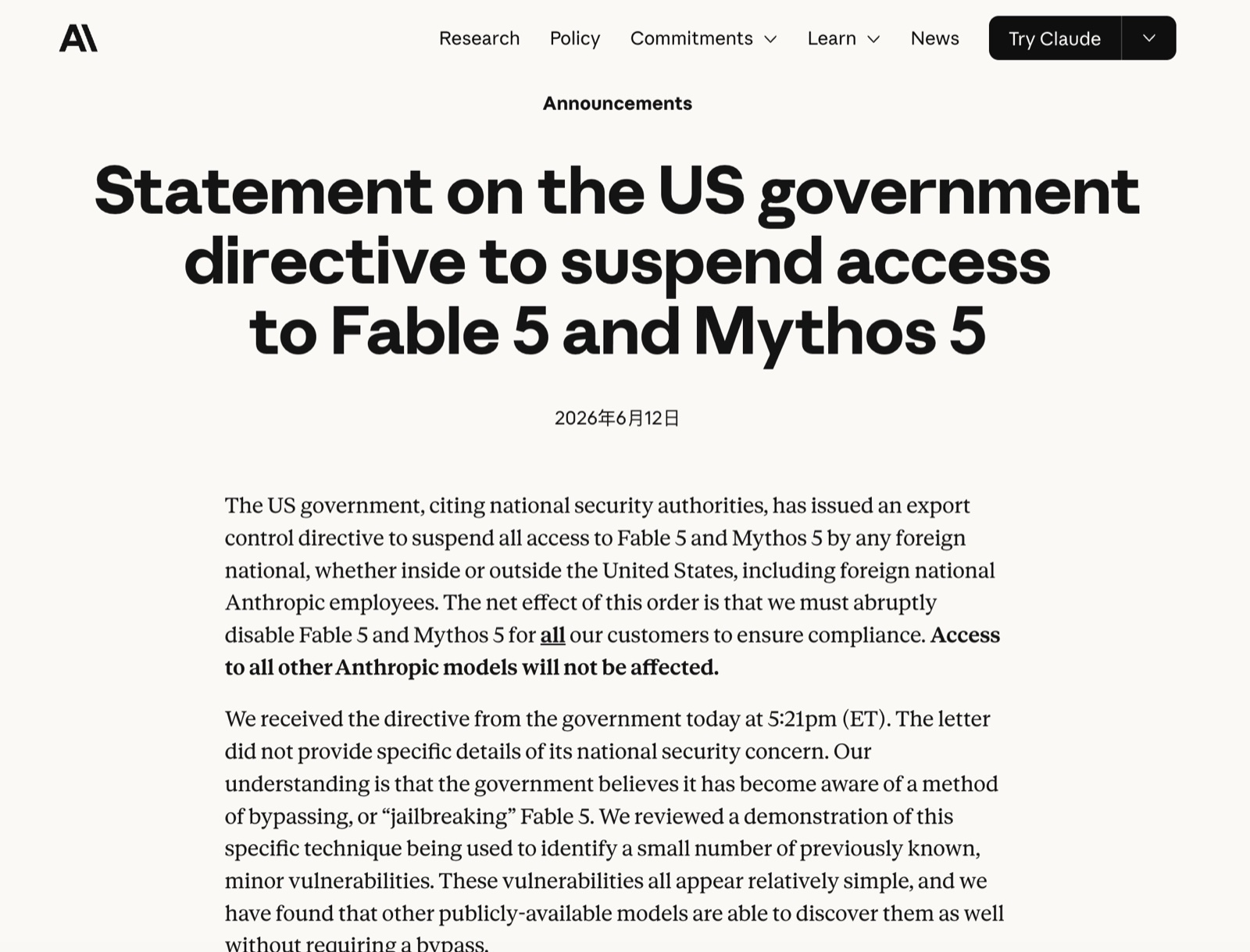
On the morning of June 13th, I opened my computer to continue running tests, only to find Fable wouldn’t load and other models were running slowly. After checking, I discovered that on June 12th, the US government had used “national security” as grounds to require Anthropic to suspend two of its newest models, Fable 5 and Mythos 5. Overnight, users worldwide lost access.
What Exactly Did the US Government Order Suspended?
Let me clarify the facts first, because this incident could easily be misreported as “US bans Anthropic’s AI.”
According to Anthropic’s official statement, this was an “export control directive” invoking national security authority, requiring a ban on “any foreign nationals” accessing Fable 5 and Mythos 5, regardless of whether they are in the US, including Anthropic’s own foreign employees. In practice, the only way to achieve this level of compliance was to shut down both models for all users. The statement also emphasized in bold: all other Anthropic models remain unaffected.
So this isn’t a typical “company shutdown.” What’s concerning is that the government isn’t just regulating the enterprise, but directly reaching toward frontier models themselves, requiring them to withdraw from public use under the banner of national security and export controls.
Anthropic stated they received this directive at 5:21 PM Eastern Time that day, and the letter did not clearly specify what concrete risks the alleged national security concerns actually pointed to.
How Serious Is That “Jailbreak”? What Does Anthropic Say?
The word “jailbreak” itself carries tremendous power. It immediately evokes hackers, attacks, intrusions, loss of control, as if these two syllables appear and the details behind them no longer matter. The most dangerous aspect of governance often lies in language condemning before understanding catches up.
In their statement, Anthropic said: so far, the verbal evidence provided by the government simply involves asking the model to read a specific codebase, identify software vulnerabilities within it, and assist with patching. If we place this in the actual context of cybersecurity work, it’s neither mysterious nor rare. It’s what many engineers do every day.
Anthropic’s response operates on three levels. First, they indicate that upon re-examining the demonstration, they found the model only identified previously known vulnerabilities with limited impact. More importantly, these vulnerabilities aren’t unique dangerous capabilities of Fable 5 or Mythos 5. Other publicly available models can do the same, including OpenAI’s GPT-5.5. In other words, the issue isn’t that some model suddenly crossed a red line, but that regulators may be misreading basic capabilities the entire industry already possesses as a special threat. Second, reading code, finding vulnerabilities, and assisting with patches isn’t the exclusive domain of attackers in cybersecurity. It’s basic daily work for defenders. The question isn’t whether models can see vulnerabilities, but what governance framework, usage context, and responsibility boundaries they operate within. Third, before Fable’s launch, it underwent thousands of hours of red team testing with the US government, UK AISI, and multiple third-party organizations, showing its defenses exceeded any deployed model in the industry, with no testers finding any “general jailbreak” to date.
📊 Key Data
- Takedown time: June 12, 2026, 5:21 PM (Eastern Time) directive received
- Impact scope: Fable 5, Mythos 5 only; other models unaffected
- “Jailbreak” content: Asking model to read code and find/patch vulnerabilities
- Pre-launch testing: Thousands of hours with government, UK AISI, third-party red teams
- General jailbreaks: 0 found to date
In other words, to those who understand this industry, this music isn’t unfamiliar. The action magnified into a national security threat is actually a basic defensive move performed daily in cybersecurity. The problem is, when a regulator can’t understand this music, they see a group of people making incomprehensible movements.
Why This Isn’t Just About Anthropic
Anthropic’s position is clear: they haven’t chosen to defy the law, but have proactively complied; however, they haven’t equated compliance with agreement.
They’ve highlighted a concern much larger than “whether two models can be used.” Anthropic believes a “narrow, non-general” potential jailbreak shouldn’t justify recalling a commercial model already serving hundreds of millions of people. If this standard were truly applied across the industry, basically no frontier model could ever launch again. Because any sufficiently powerful model can “read code and find vulnerabilities.”
Here’s what needs distinguishing: is this a defect or a capability? If a model’s ability to read code, understand structure, and identify vulnerabilities is considered an unacceptable risk, then what’s being criminalized is no longer some specific behavior, but intelligence itself. This is what I find most troubling.
Anthropic also echoed their previous position in “Policy on the AI Exponential”: governments should certainly have power to block unsafe deployments, but only through “transparent, fair, clear, technically-grounded” legal processes. This action doesn’t meet those principles. This is the most crucial point of the entire incident, far more serious than “we got taken down.” This is why I’ve placed this piece in the Civilization and Humanity series: it appears to be AI news on the surface, but at its core it’s about how people face things they don’t understand.
A Builder’s Ground Experience: I Spent Over $150, Then It Vanished
Let me share my personal experience.
Before Fable was suspended, I was burning through credits running a round of tests. Looking at my Extra bill, I spent over $150 in two days. For someone paying out of pocket to validate tools, hands-on work is the only way to develop a concrete sense of what a model “can do.” Understanding tools can’t rely only on what others say. You must put them through your own problems, processes, and constraints to see how many tasks they can complete.
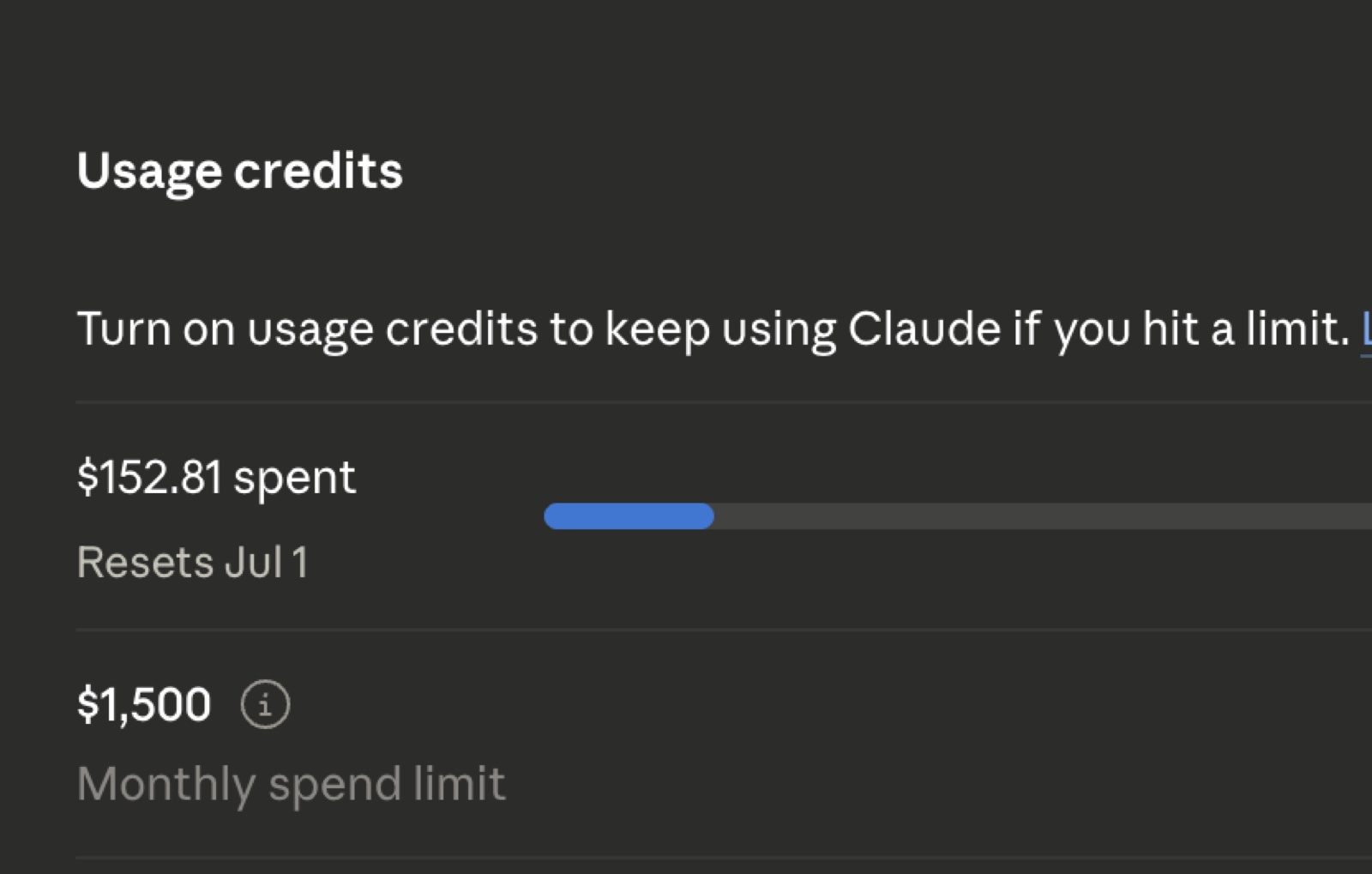
Precisely because of this, when it vanished overnight, my reaction wasn’t shock at the news, but work disruption: project halfway done, tool gone. This is what regulatory uncertainty really looks like. Not policy debates on paper, but direct interference with ongoing production workflows.
Then I thought about the bill, with mixed feelings. Over $100. Now it seems worthwhile: at least before it disappeared, I’d already put it through its paces and knew how it felt. This is probably the absurdity this era offers builders: tools evolving rapidly while institutions haven’t yet understood them. We chase technology while bearing the risk of it being shut down at any moment. So when we can use something, we use it thoroughly; when we can understand it, we understand completely, preserving our own judgment and intuition. This also proves we’re indeed at the frontier where knowledge meets institutions.
How Do Those Who Cannot Hear Music View the Dancers?
What unsettles me about this incident isn’t the model takedown. Models can be restored, communication can continue, and Anthropic has said they consider this a misunderstanding and are actively working toward restoration.
What unsettles me is the deepening chasm of understanding. When governance doesn’t understand industry, what it sees is a group of uncontrollable people approaching dangerous boundaries. To those within, it’s not loss of control, but new working order taking shape.
In this increasingly complex 2026, understanding each other becomes ever harder. But I don’t want to oversimplify this as “tech people understand, regulators don’t.” That’s too easy, too arrogant. Looking deeper, we all risk becoming the person who cannot hear the music in certain domains. Facing worlds unfamiliar to us, it’s easy to see others’ rhythms as chaos, capabilities as threats, things we don’t yet understand as things that shouldn’t exist. Whether we can pause that “they’re insane” instinct and admit we might simply not yet hear. This requires not knowledge, but humility.
So the dancers aren’t necessarily insane.
Often, it’s simply that observers haven’t yet heard that music.
And a truly mature age of governance cannot just rush to stop the dancing; it must first learn to recognize where that music comes from and where it’s taking us.
FAQ
Q: Did the US government take down all of Anthropic’s AI models? No. This only targeted Fable 5 and Mythos 5. The official statement clearly states all other models remain unaffected. But because the directive required “prohibiting any foreign national access,” Anthropic had to suspend these two models for all users to ensure compliance.
Q: How dangerous is the government’s claimed “jailbreak”? According to Anthropic, the government’s verbal evidence essentially amounts to “asking the model to read code and find/patch vulnerabilities.” These vulnerabilities are known and minor, other public models can find them without any jailbreak, and this is daily defensive work for security engineers.
Q: Did Anthropic comply? Yes, they suspended access for all users while publicly disagreeing with the decision, arguing a “narrow, non-general” potential jailbreak shouldn’t justify recalling a commercial model serving hundreds of millions. They consider it a misunderstanding and are working toward restoration.
Q: Why does this matter? Because it’s the first head-on collision between AI regulation and frontier models. It affects the entire industry’s future regulatory framework, not just whether two models can be used.

💬 Comments
Loading...